The latest on all the mods and hacks available this week to test your kids' coding skills!
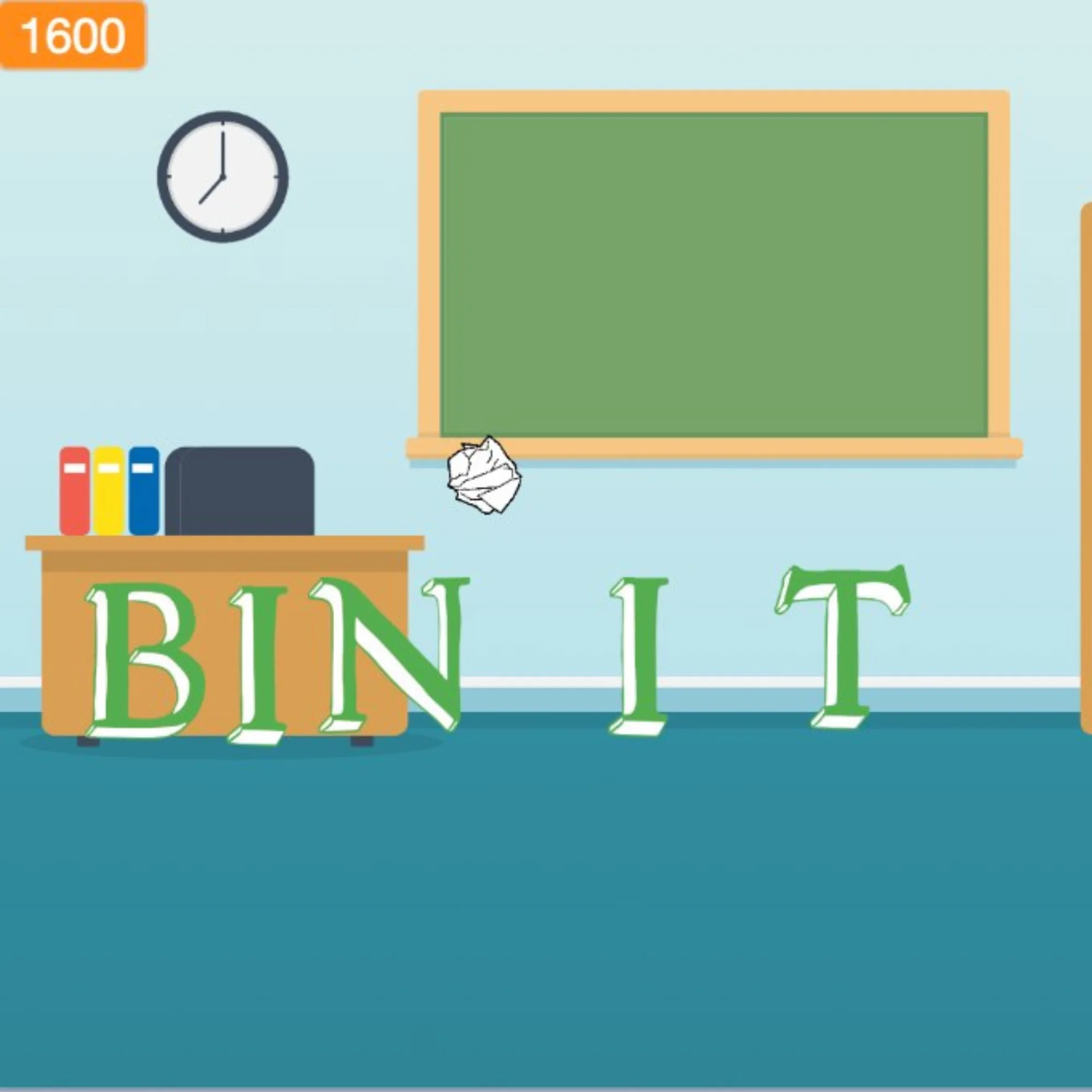
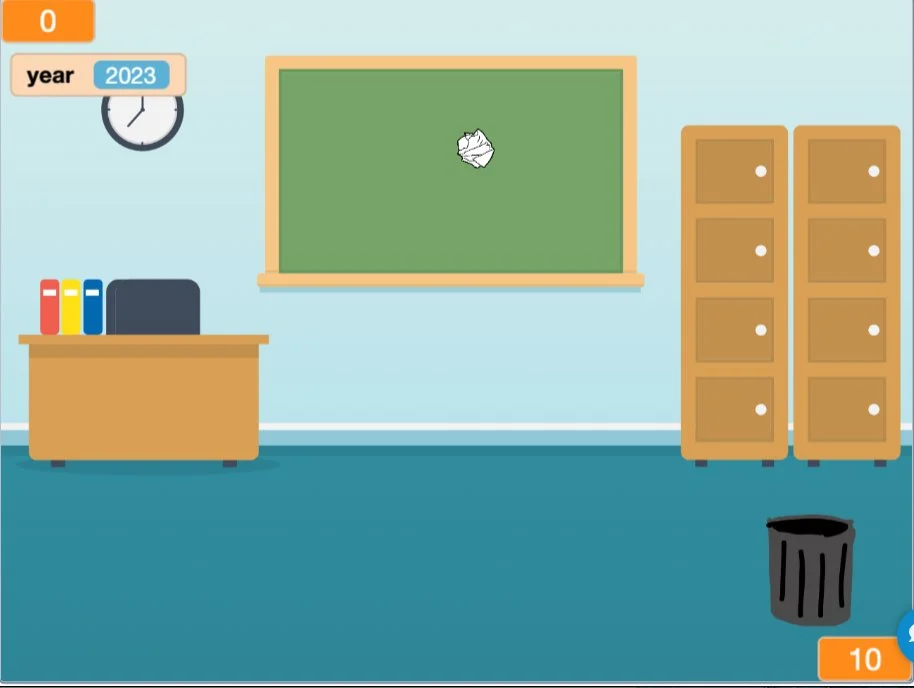
For our Hacker Level club members, we're introducing a quirky game called "Bin It". A fun little precision testing title where players must toss a ball of paper into a bin. It's a simple concept, but it's addictively fun!
Through a few simple code changes, those following our set guided hack of the week will be creating a series of powerups that players can nab to get some of their time back.
However, this game uses a velocity mechanic using variables which makes it very tricky to pull back the mouse and fire the paper into the bin. Our hackers loved the challenge! We spent a lot of the session coding different ways to make this difficult game more manageable for the players.
First things firsts was our Guided Hack. This week, we showed our young coders how to code a power-up which grants the player more time when it was hit with the paper. Using cloning code along with randomised time and placement code, the timer power-up would appear throughout the stage at different spots and times. We also added in an animation for when the timer power-up appeared and disappeared - changing the size of the timer with repeat blocks to give the illusion of it popping in and out of the game.
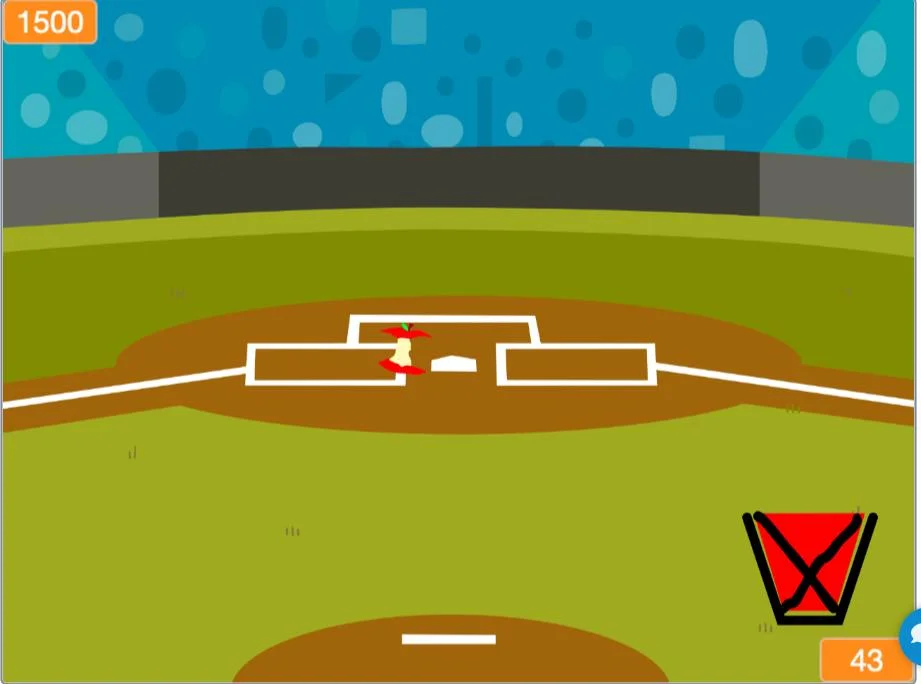
Our hackers took this week's Guided Hack and made it their own; duplicating the timer power-up scripts, our members were able to change the power-up from granting us extra time to giving us extra points just by editing the code's variable - neat! They also took inspiration from the animation script by copying it to other sprites and editing the effect. Many of my members would make the bin disappear and reappear in order to make the game even more challenging, whereas others changed the colour effect of the background to give the whole game a more fun rainbow theme.
Our Modder Level club members have spent their sessions delving deeper into the eerie corridors of "Shadowy Shootout". With the new update, we have a guided hack that will walk you through the creation of doors that open when the player is nearby.
By exploring this guided hack, these boys and girls have had some further practice with collision detection and proximity sensing to help create interactive and dynamic environments in their games.
As always, we encourage you to share your modded games with the club. Show us how you've mastered the fine art of precision in "Bin It" or how you've enhanced the spookiness of "Shadowy Shootout" with your proximity-activated doors!
About The Code Zone Academy
Posts like this one are written by the mentors, about what members have been building. The Game Dev Academy has no fixed session time: a new build goes up every week and a child opens it whenever they are ready, with a STEM-certified mentor answering by text and video message when they get stuck.
Children build their own games rather than following a set course, starting in Scratch. Levels move down as readily as up, and staying where you are is a perfectly good outcome. Every mentor is background-checked and STEM-certified.
The blog is in two halves. Guides are the evergreen explainers written by the mentors who teach the clubs, covering the questions parents actually ask: what comes after Scratch, how to support a coding-mad child when you cannot code yourself, and what works for autistic and ADHD children.
Club news is the other half, and it is where posts like this one live: game jams, Minecraft builds and weekly roundups, written up by whoever ran the session. Neither is marketing. If you want to know what the work actually looks like before you sign up to anything, club news is the more honest read of the two.