
What is Spiral Learning?
In our clubs we use something called Spiral Learning... but what does that mean? Keep reading to find out more about this awesome learning technique, and how it works in our clubs!
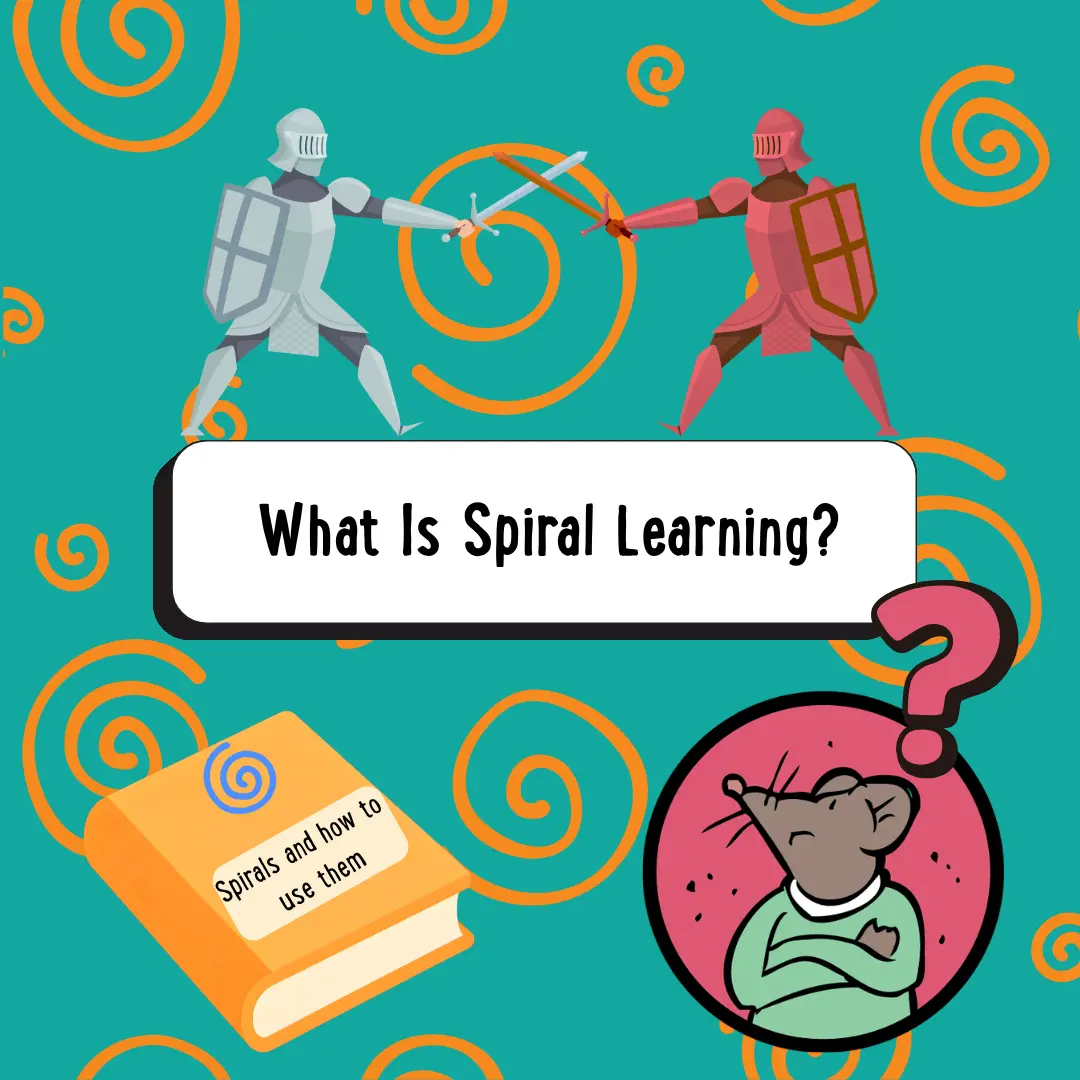
Here at The Code Zone we have a very particular way of helping our members learn and improve their coding skills. It's called “Spiral Learning” due to the fact that we come back to concepts with new knowledge over and over again to reinforce and improve our skills.
Spiral Learning In Our Clubs
What is Spiral Learning?
Before we dive too deep into why we think spiral learning is a great method to learn, perhaps we should describe a little more about how it works!
To pull from one of our favourite topics, video games, let’s say that early on we fight a big heavily armoured knight, and that knight is taking very little damage from us whacking it with our sword.
Luckily we just learned a neat new magical attack, which deals massive amounts of damage. Later on, we fight another heavily armoured knight, this time wearing red armour. Although they look a little different we’ve still learned that magic is the way to go so we use it and win easily!
How does this work in club?
That idea works for our code cards too! We might have one game where we build a lives system to let us keep playing a game after a mistake, and then at a later point we have another game that has a lives system to be added. While the two games may look a little different in how they implement them, the fundamentals are the same.
We come back to these ideas and concepts over and over again, using new things we’ve learned to augment them and giving us a sense of progression and learning! Even at our highest level clubs, our members still circle back and reinforce the learning that they started at the very beginning.
How does Spiral Learning benefit our members?
We find that allowing our members to learn this way, means that they can still get the excitement of learning something new each week, all while circling back to relearn and reinforce the things they have done in the past!
If the way we learn sounds interesting to you, sign up now for a free taster session!
About The Code Zone
The Code Zone teaches children aged 6 to 16 to code by building their own games. Outside the UK that is the Game Dev Academy: self-paced, so a child works at whatever hour suits them in any time zone, with a background-checked, STEM-certified mentor answering by text and video message.
It started in Britain, where in 2026 it was the highest-placed coding club in Club Hub UK's Top 100 Children's Activity Providers, and in 2025 received the Autism Inclusion Award from the National Autistic Society, the UK's leading autism charity. More than a third of members are autistic or have ADHD, based on what parents tell us when they join.
More like this
The blog is in two halves. Guides are the evergreen explainers written by the mentors who teach the clubs, covering the questions parents actually ask: what comes after Scratch, how to support a coding-mad child when you cannot code yourself, and what works for autistic and ADHD children.
Club news is the other half, and it is where posts like this one live: game jams, Minecraft builds and weekly roundups, written up by whoever ran the session. Neither is marketing. If you want to know what the work actually looks like before you sign up to anything, club news is the more honest read of the two.
Creating an account is free and we do not ask for card details. Create a free account, see what it costs, or read about support for neurodivergent children.


