
STEM Certified Learning to code
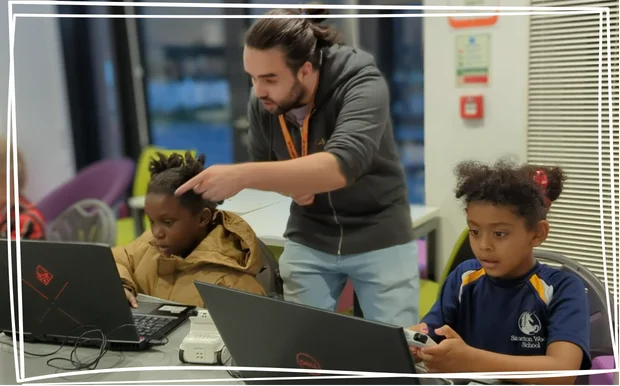
As of January 2024, The Code Zone has been STEM officially certified by STEM.org.
This is a great recognition for the hard work that goes into the content that the mentors create for the children in our Academy.
Coding & STEM
Each game and coding skills made by our mentors touches on the concepts of STEM.

 Science
 Engineering
 Technology
 Maths
MathsJoin The Code Zone
Create a free account.. no card needed
Find out more

What STEM certification means for your child
Certification is easy to wave around and hard to interpret, so here is the practical version. It means the content our mentors build has been assessed against an external standard rather than being whatever we felt like teaching that week, and it means every mentor has been individually assessed too, on top of an background check.
What it does not mean is a syllabus. Children here build their own games rather than working through a course, and the STEM concepts arrive because they are needed. A child making a platformer meets gravity, collision detection and coordinate geometry in the same afternoon, and meets them as problems to solve rather than topics to cover.
That is a very different experience from being marked on a worksheet, and it is why children who find maths hard often take to this.
Where it leads
Most children start in Scratch or MakeCode and move to Python and TypeScript when they are ready, which for most is somewhere around 10 or 11. Our awards programme is STEM accredited and children work through it in the clubs, so there is something to show for it beyond a folder of half-finished games.
A good deal of what children learn here turns up later in school computing lessons, which is usually the first a parent hears about any of it. In 2026 we were ranked second in the UK in Club Hub UK’s Top 100 Children’s Activity Providers, and in 2025 we received the Autism Inclusion Award from the National Autistic Society.
FAQ
From the blog

What are the children building this month?
One email a month: the games our members have made, what is coming up, and the odd thing worth trying at home. No pressure, and you can leave whenever you like.