
Virtual Reality Safety
We have started using Virtual Reality in our clubs, but there are a few things to be aware of.
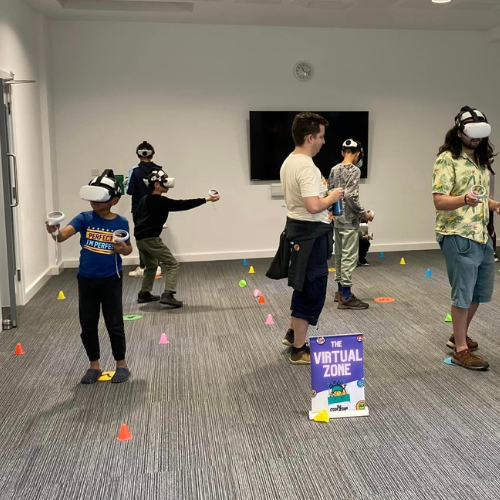
Virtual Reality is a lot of fun, and we have developed a game that children can play in to interact and code objects to move around and solve puzzles. There are, however, a few things that we think you should be aware of.
There are currently no long-term studies on the affects of Virtual Reality. The studies that do exist say "Young children tolerate fully immersive 3D virtual reality game play without noteworthy effects on visuomotor function". However, each manufacturer has set down recommended ages and we use Oculus 2 headsets, which have recommended age of 13+.
This is, in the most part we believe, due to the fact that you have to be 13 to have a Facebook account. Obviously we want to do everything we can to keep children safe, but also allow children to experience such exciting technology.
All of the safety worries are around the impact of long-term and constant use and exposure, which is not our aim. All VR sessions will be limited to 20 minutes, with a break of at least 20 minutes between activities.
The activity we mostly use in the club requires coding on the computer, and then looking to see what the impact is within the headset.
VR can cause motion sickness in some people. We will encourage all children to tell us if they do and we will adjust how they use the headsets.
We have experiences that don't induce motion sickness in even the wobbliest of people. If your child feels woozy we will suggest they take a break, and give them some advice on how we can adjust things for them. Please let us know if they mention anything at home!
When booking, please indiciate that you are happy for your child to use VR. If you are not then please let us know and we will make allowances so they don't miss out on the coding.
Finally - our mums use to say "don't sit so close to the TV or you'll get square eyes" and...well...sorry mum!
About The Code Zone
The Code Zone teaches children aged 6 to 16 to code by building their own games. Outside the UK that is the Game Dev Academy: self-paced, so a child works at whatever hour suits them in any time zone, with a background-checked, STEM-certified mentor answering by text and video message.
It started in Britain, where in 2026 it was the highest-placed coding club in Club Hub UK's Top 100 Children's Activity Providers, and in 2025 received the Autism Inclusion Award from the National Autistic Society, the UK's leading autism charity. More than a third of members are autistic or have ADHD, based on what parents tell us when they join.
More like this
The blog is in two halves. Guides are the evergreen explainers written by the mentors who teach the clubs, covering the questions parents actually ask: what comes after Scratch, how to support a coding-mad child when you cannot code yourself, and what works for autistic and ADHD children.
Club news is the other half, and it is where posts like this one live: game jams, Minecraft builds and weekly roundups, written up by whoever ran the session. Neither is marketing. If you want to know what the work actually looks like before you sign up to anything, club news is the more honest read of the two.
Creating an account is free and we do not ask for card details. Create a free account, see what it costs, or read about support for neurodivergent children.


